Draw What You Think, Learn What You Draw
Welcome! We’re exploring visual note-taking techniques for faster learning, turning lectures, pages, and passing ideas into simple sketches, frames, and symbols that your memory eagerly revisits. Expect science-backed insights, practical routines, heartfelt stories, and prompts that transform complexity into clarity. By the end, you’ll capture concepts swiftly, recall them under pressure, and explain them with confidence to classmates, colleagues, or anyone who loves clear thinking wrapped in expressive, memorable visuals.
Why Pictures Move Faster Than Paragraphs
Behind faster learning with drawings sits a powerful blend of cognition and emotion. Dual coding connects words and images, while well-managed cognitive load prevents overwhelm. Add a dose of novelty, and attention locks on. I once watched a nervous biology student color-code pathogens as quirky icons; exam panic melted because retrieval turned playful and immediate. Visual note-taking is not art class—it’s efficient thinking made visible and surprisingly dependable under stress.

Lines, Arrows, and Structures That Explain Themselves
Speed emerges from structure. Visual note-taking accelerates comprehension when relationships are mapped with lines, arrows, and white space that breathe. Mind maps radiate association; sketchnote layouts pace attention; flowcharts force decisions into view. The result feels like switching from a cluttered drawer to labeled compartments. You stop hunting for lost points and start tracing meaning. Clear structures become study partners, nudging your brain to follow logic without unnecessary effort.
Analog Tools That Never Crash
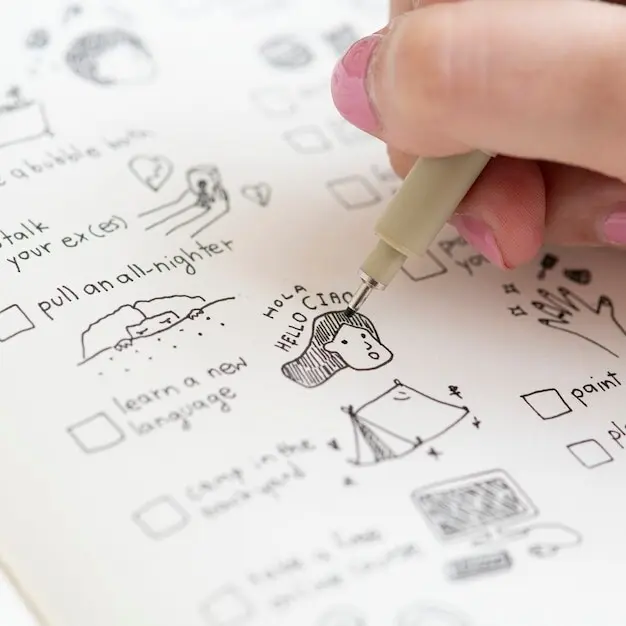
Choose a notebook with paper that tolerates highlighting without bleeding. Pair a bold fineliner for headers with a finer pen for details. Add a gray brush pen for shadows that create instant hierarchy. Clip a mini ruler for clean boxes. This portable rig invites quick marks anywhere: lecture hall, bus stop, or coffee line. Reliability builds trust, and trust builds a habit that persists long after initial motivation fades.
Digital Setups That Sync Memory
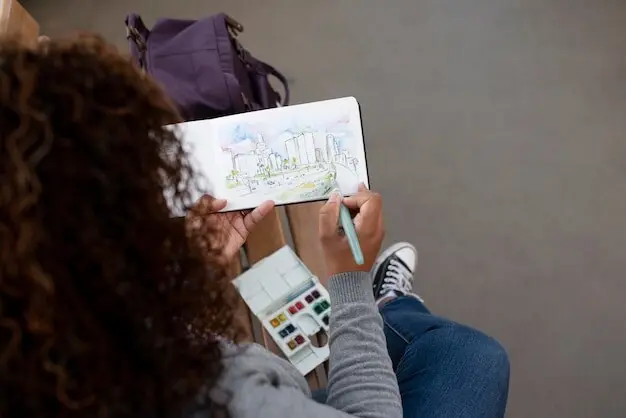
On tablets, pick a note app with layers, shape snapping, and fast lasso selection. Set a limited palette and two pen weights mapped to hotkeys to reduce choice paralysis. Export to searchable PDFs, tagging pages with concise keywords for retrieval. Use handwriting recognition sparingly, relying on anchored visuals to preserve spatial memory. Sync across devices so review moments multiply naturally, transforming idle gaps into potent micro-revision sessions that reinforce durable understanding.
Techniques You Can Apply In Real Moments
Live settings reward clarity over perfection. Before a session, sketch a page scaffold. During delivery, capture verbs, relationships, and standout numbers, not every word. Afterward, refine, highlight, and add icons where meaning could slip. This three-phase approach converts chaos into signal without stalling your listening. With repetition, your hands learn patterns that keep up with fast speakers, tangents, and dense slides, producing pages that teach you again the moment you glance back.
Before The Session Even Starts
Write the session title, expected outcomes, and three big questions you hope to answer. Draw a loose grid for sections, leaving margins for symbols and sources. Preselect colors to avoid mid-lecture dithering. If possible, preview slides or abstracts and sketch a one-line map of likely flow. This priming narrows attention, accelerates capture, and gives you a compass when the speaker diverges or the discussion unexpectedly deepens into new, promising territory.
While Ideas Are Flying Fast
Listen for structure: problem, approach, evidence, implication. Capture those as labeled anchors, then add brief arrows to tie them together. Use icons for recurring concepts to reduce handwriting. Mark uncertainties with a question symbol and circle claims requiring verification. When content spikes, drop detail and preserve skeleton flow. Trust that a clear spine beats messy completeness. Your future self will thank you for legible pathways instead of frantic, forgotten scribbles.
After The Talk Ends
Take five minutes to clarify handwriting, thicken headlines, and add color-coded highlights. Translate one dense paragraph into a diagram or timeline. Annotate gaps with next actions, like finding a paper or emailing a clarifying question. Summarize the core insight in a single sentence box. Then snap a photo or export digitally to archive. This tiny cool-down cements memory, exposes missing links, and transforms raw capture into a durable, shareable learning artifact.
Make Recall Automatic With Spaced Visuals
Learning speeds up when review is strategic. Pair visuals with spaced repetition and active recall so ideas resurface just before they fade. Convert sketches into compact prompts, then test yourself without peeking. Each successful retrieval strengthens pathways; each stumble invites a smarter redraw. Build decks of image-backed cards, link them to timelines, and layer mnemonics thoughtfully. Soon, diagrams trigger explanations, and your hand instinctively reproduces structures that once felt intimidating.
Grow A Habit And Share What You Learn
Tiny Wins, Tracked Daily
Commit to five-minute sessions after coffee or before shutting your laptop. Record one small metric—pages made, concepts clarified, or a single icon learned. Post a weekly highlight to a private group or journal it quietly. Visible streaks reduce decision fatigue and make missed days anomalies instead of habits. When progress dips, shrink the goal, not the commitment. Tiny wins compound surprisingly fast, yielding smoother lines, quicker captures, and calm confidence.
A Library Of Personal Glyphs
Create a one-page legend of icons you reuse for actions, problems, data, people, and time. Keep forms simple so they’re drawable in two seconds. Repetition breeds fluency, and fluency frees attention for listening. As your courses or projects change, evolve the set and version it. Soon, a dozen stable glyphs carry most meanings, shrinking handwriting while expanding clarity. This vocabulary becomes your shorthand for thinking, collaborating, and teaching across contexts.
Join The Conversation
Invite feedback by sharing a page with one concise question: What felt clear, and what felt crowded? Encourage classmates or teammates to annotate digitally or with sticky notes. Host a casual swap session where everyone explains one diagram aloud. Ask readers to subscribe, comment, or send their fastest capture tip. Community gives accountability, new techniques, and welcome encouragement on hard weeks, turning solitary practice into a supportive, continually inspiring exchange.
All Rights Reserved.