Sketch Your Day Smarter

Today we dive into Digital Sketchnoting: Apps and Workflows for Daily Tasks, blending handwriting, icons, and structure to think faster and stay organized. You’ll explore practical app choices, repeatable routines, and tiny visual tricks that transform meetings, planning, and learning. Bring your stylus, curiosity, and five spare minutes—then share your results, questions, and favorite setups with our community.

Choosing the Right App for Your Canvas

Great digital sketchnotes start with tools that match how you think. Compare vector flexibility, handwriting search, page management, and export clarity before committing. We’ll weigh strengths of cross‑platform notebooks and infinite canvases, discuss latency and palm rejection, and build a short checklist so your daily pages feel effortless and reliable.
Understand the difference between resolution‑independent vector strokes and expressive raster brushes, and when each shines for fast meetings or detailed diagrams. Explore infinite canvases for sprawling mind maps, compare file sizes, and learn zoom workflows that keep line weight consistent while preserving legible text at every export.
Handwriting recognition turns messy scribbles into searchable memory. Evaluate on‑device accuracy, language support, and privacy, then design a tagging system combining dates, projects, and verbs. Build one capture index page, link sections, and practice queries that surface decisions, sketches, and action items exactly when pressure rises.

A Daily Capture Workflow That Never Clutters

The Morning Canvas

Open a fresh frame, write the date boldly, and sketch three most important tasks beside a simple energy gauge. Add a mini-agenda, blockers, and a gratitude doodle. This gentle ritual primes attention, reduces anxiety, and anchors your day before notifications try hijacking your focus.

The Two-Minute Processing Rule

Open a fresh frame, write the date boldly, and sketch three most important tasks beside a simple energy gauge. Add a mini-agenda, blockers, and a gratitude doodle. This gentle ritual primes attention, reduces anxiety, and anchors your day before notifications try hijacking your focus.

Evening Review and Link-Backs

Open a fresh frame, write the date boldly, and sketch three most important tasks beside a simple energy gauge. Add a mini-agenda, blockers, and a gratitude doodle. This gentle ritual primes attention, reduces anxiety, and anchors your day before notifications try hijacking your focus.

Visual Vocabulary for Faster Thinking

Speed grows when your hand knows where it’s going. Build a tiny alphabet of arrows, containers, faces, timelines, and connectors, each practiced until automatic. Pair a restrained color palette with consistent shadows and headers, so your brain recognizes patterns instantly and decisions surface without hesitation.

Icons You Can Draw in Five Strokes

Design shortcuts your future self appreciates. Create fast symbols for person, idea, email, bug, decision, and risk, each under five deliberate strokes. Practice with a metronome pace, aim for legibility over polish, and store exemplars on a reference strip docked beside today’s notes.

Layouts That Guide Attention

Prevent cognitive traffic jams with simple, reusable structures. Alternate two-column summaries with storyboard rows, mind map bursts, and vertical timelines. Reserve margins for metadata and tasks. Readers should feel gently led from context to decision to action, without hunting for the next meaningful element.

Color and Contrast with Purpose

Color is communication, not decoration. Assign one hue for anchors, another for actions, a third for references, and keep a neutral base. Maintain high contrast, consider color‑blind palettes, and reserve gradients for section breaks so information hierarchy remains crystal clear under time pressure.

Meetings, Classes, and Quick Huddles Without Losing the Thread
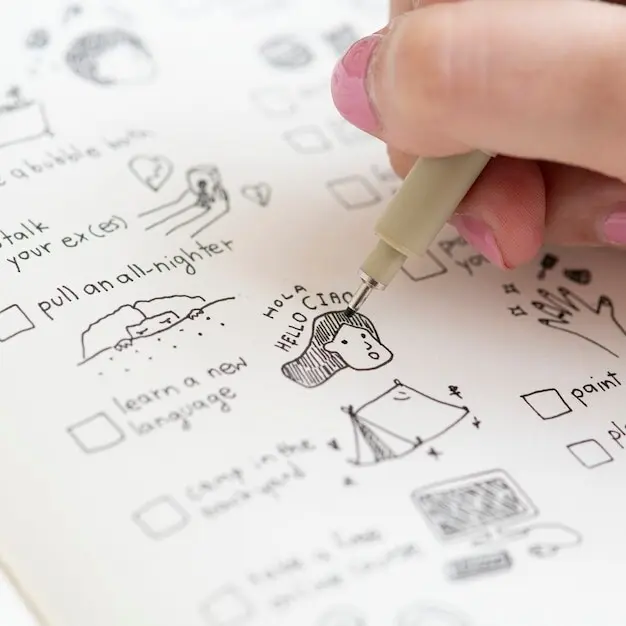
Real-time capture rewards structure and restraint. Prepare a header with attendees, goals, and time budget, then listen for decisions, risks, and owners. Sketch diagrams only when they clarify movement. Record actions with verbs first, names second, deadlines third, and confirm aloud so nothing slips quietly.

From Paper Habit to Digital Flow

I loved paper until a rainy commute smeared a week of planning. Moving digital preserved the feel of ink while unlocking search, layers, and backups. We’ll smooth your transition with pens that look familiar, templates that respect margins, and rituals that keep screens humane.

Share, Teach, and Grow with a Community

Publishing your pages multiplies learning. Share annotated process clips, exchange brushes, and compare workflows kindly. Add alt text for accessibility and blur sensitive data before posting. Invite questions, trade constraints for playful challenges, and subscribe for weekly prompts that keep practice alive without pressure.
Choose transparent PNG for slides, vector PDF for print, and high‑DPI JPEG for quick sharing. Remove heavy backgrounds, keep margins generous, and embed fonts when possible. Test readability on a small phone screen before posting, then include a lightweight text summary for search.
Adopt a repeatable cadence: one daily doodle, a Monday tools tip, and a Friday highlight reel. Use consistent tags, descriptive filenames, and scheduled posts. Invite replies with a question, then compile the best insights into a seasonal email, downloadable template, or mini workshop.
Kiravirolivokentonarifari
Privacy Overview

This website uses cookies so that we can provide you with the best user experience possible. Cookie information is stored in your browser and performs functions such as recognising you when you return to our website and helping our team to understand which sections of the website you find most interesting and useful.